Green claims & more EU legislation: what you need to know
30 july 2025
This blog is written by our communication consultant, Deike Robotta.
Sustainability claims are under the spotlight
Let's talk Green Claims Directive and more... yes there is more.
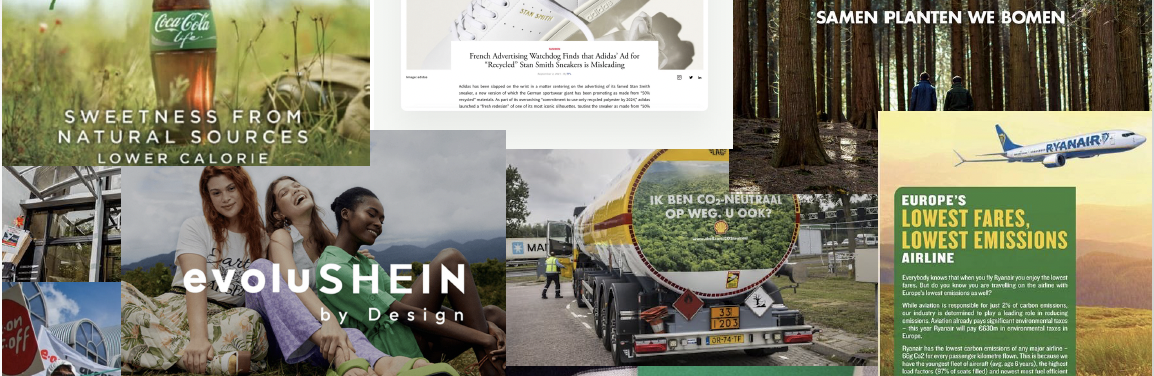
If you’re talking about sustainability, chances are your green claims (or sustainability claims) are being looked at more critically than ever. A European Commission study from 2020 showed that 53 % of sustainability claims were vague or misleading, and 40 % had no proof at all. Words like “eco-friendly,” “green,” “sustainable” or “climate neutral” have been so overused that they’ve lost their impact. Add the over 230 different sustainability labels across the EU. Many unregulated. So, no wonder that consumers are confused and sceptical while governments are increasing their efforts for regulation.
Let's talk EU legislation
Most of you have probably heart about the Green Claims Directive. But what many companies don’t realise is that EU legislation around sustainability claims has existed for years. Let’s do a short deep-dive:
Unfair Commercial Practices Directive (UCPD)
The UCPD has been adopted in 2005, enforced since 2008. It prohibits vague or unsubstantiated voluntary sustainability and eco claims.
Empowering Consumers for the Green Transition Directive (ECGT)
Entered into force March 2024 and is an update of the rather vague UCPD. By September 2026, you won’t be able to use generic environmental claims like “eco” or “green” unless you can fully back them up with evidence. Also, misleading sustainability labels (self-created or unverified by third parties) will not be acceptable.
Green Claims Directive (GCD)
Originally proposed in March 2023, the GCD aimed to require independent verification of all sustainability claims, set detailed rules for environmental labels, and ban vague or unverifiable claims like “climate neutral” if based solely on offsets. Update July 2025: Following concerns about administrative burdens for SMEs, the European Commission paused negotiations and is reviewing the proposal. It may be revised or significantly scaled back before it moves forward. This means that parts of the GCD may be merged into the ECGT or delayed beyond 2027.
Some do's and don'ts in sustainability communication
Do:
- Be specific and clear about your sustainability benefits.
- Back up all claims with verifiable, up-to-date evidence.
- Use third-party verification (soon mandatory under ECGT and GCD).
- Be honest about what’s achieved and what’s still a goal.
- Only use officially approved sustainability labels.
Don’t:
- Use vague words like eco, green or planet-friendly without context.
- Claim climate neutrality if you can’t prove it or rely only on offsets.
- Present legal obligations as voluntary efforts.
- Make one “eco product” look like your entire brand is sustainable.
Why this matters for you
At The Terrace, we never look at compliance only. Although vague or exaggerated sustainability claims risk serious fines, reputational damage and loss of consumer trust, we truly believe in the benefits (not just avoided risks) of doing sustainability properly. Think of: building trust and credibility by being transparent, authentic, and evidence-based. Stronger brand reputation. Engaged stakeholders. Business resilience. And of course, inspiration for positive impact.
We go beyond ticking any boxes. Instead, our communication experts help companies to truly find their authentic language on sustainability. Bring ESG strategies to life, get employees, suppliers, partners or shareholder excited about ESG, and find your own “why” on sustainability for the long run.
In our latest blog about the 6 principles for sustainability communication we explain how to develop sustainability communication that isn’t just credible but also inspiring. Because let’s be honest: The days of self-declared eco claims and “climate neutral” labels are over, aren’t they?